
Currituck County Death Index Lookup
Currituck County death index records are held at the Register of Deeds office in northeastern North Carolina. The county sits along the coast near the Outer Banks. Currituck County has deep historical roots, with records going back to the 1600s. Death records from 1913 forward are on file at the local level. This guide covers how to search the Currituck County death index and where to find older records tied to the area.
Currituck County Quick Facts
Currituck County Death Index Office
The Currituck County Register of Deeds maintains death records for the county. The office keeps birth, death, and marriage certificates. Staff issue certified copies to those who meet the state rules. The office also manages land records and other public documents for Currituck County.
You can visit the Register of Deeds during business hours. Bring a valid photo ID. You will need the full name of the deceased and the date of death. Staff will search the Currituck County death index and provide a copy if the record is on file. The fee for a certified copy is ten dollars at the county level. This is much less than the twenty-four dollar fee at the state office.
Under NCGS 130A-93, certified copies of death certificates go only to eligible family members. This includes a spouse, parent, child, sibling, grandparent, or grandchild of the deceased. Legal representatives can also request them. Anyone else can get an uncertified copy, which works for research but not legal matters.
Currituck County Historical Death Index
Currituck County has some of the oldest records in North Carolina. Abstracts of wills and other records for Currituck County and Dare County date back to 1663. Marriage bonds go back to 1851. Marriage records span from 1831 to 1983. The county also has Negro cohabitation certificates from 1866. This deep history makes Currituck County a key area for historical research.
Death records did not start on a statewide level until 1913. Before that year, no law required counties to file death records. For Currituck County deaths before 1913, you will need to check local sources. Church records, family bibles, cemetery logs, and newspaper notices may hold the information you need. Some early records have been transcribed and are available at the North Carolina State Archives in Raleigh.
The State Archives holds death certificates from 1913 to 1975. They also maintain an index from 1913 to 1979. Filing was inconsistent in the early years. Many deaths in rural areas like Currituck County were not recorded between 1913 and 1945. Gaps in the record are common during that period.
Note: Records from before 1663 for this region are rare and may only exist in colonial archives outside North Carolina.
How to Get Currituck County Death Records
There are three main paths to get a death record from Currituck County. Each has its own timeline and cost.
The first path is in person. Visit the Register of Deeds office during business hours. Bring your ID and the details of the death. Staff search the index and can give you a copy the same day. This is the quickest way to get a Currituck County death record.
The second path is by mail. Write a request letter or fill out the county form. Include the name of the deceased, date of death, your relationship, a copy of your ID, and a check or money order for ten dollars. Add a self-addressed stamped envelope. Send it to the Currituck County Register of Deeds. Mail requests take a few weeks.
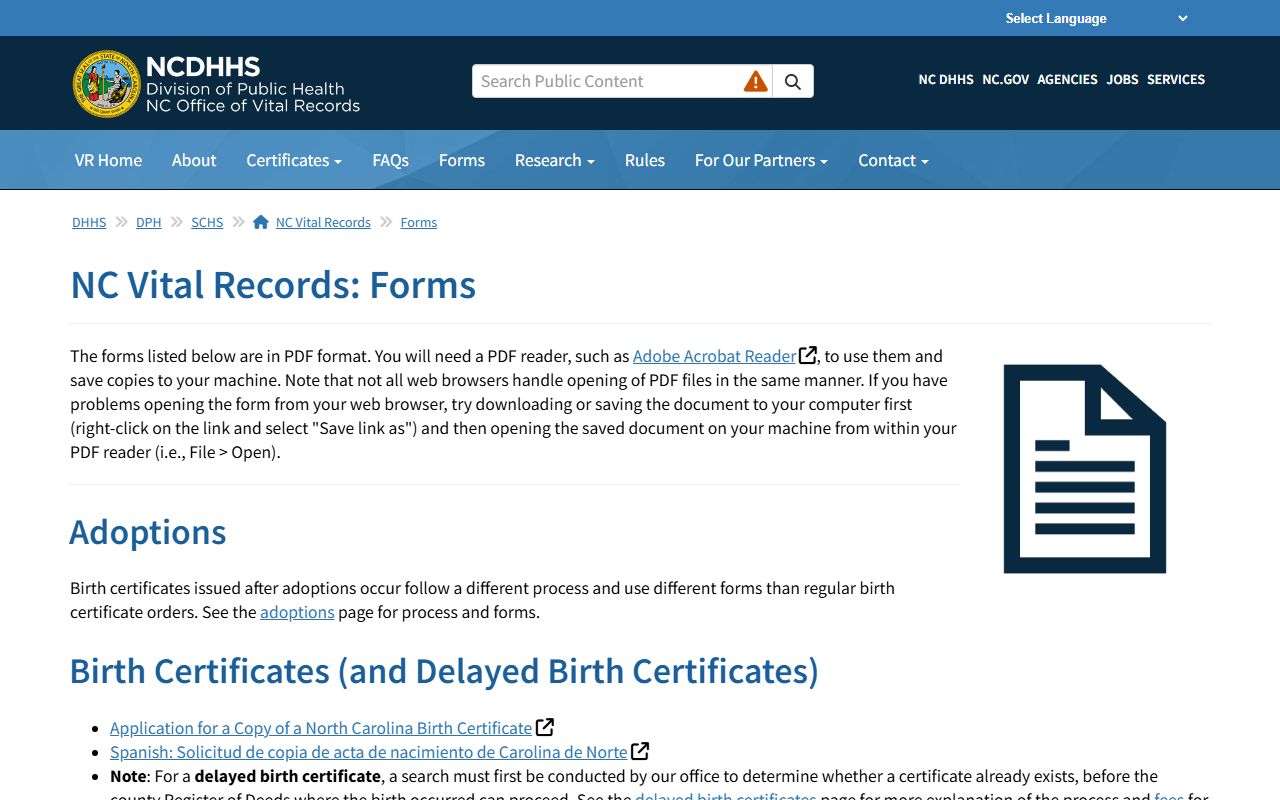
The third path is through the state. You can order from North Carolina Vital Records or through VitalChek online. The state fee is twenty-four dollars per three-year search. Processing times are currently 110 to 115 business days. The NC Vital Records forms page has the death certificate request form in English and Spanish.
Currituck County Death Index for Research
Genealogy researchers use the Currituck County death index often. The county's long history draws many people who trace family lines in this part of North Carolina. Death certificates hold key data for building a family tree.
A Currituck County death certificate shows the full name of the person who died, both parents' names, the mother's maiden name, the cause of death, the place of death, and where the person was buried. It also lists age, occupation, and marital status. If married, the spouse's name appears on the record. This level of detail is why death records are among the most useful vital records for genealogy.
The North Carolina Genealogical Society publishes a guide to vital records across the state. It recommends getting uncertified copies from the county Register of Deeds for research. These cost less and are open to anyone. The NC Vital Records research page also suggests starting at the county or the State Archives rather than the state office for genealogy work.
Currituck County marriage records and indexes can also help with genealogy. The county keeps marriage indexes and various other records that pair well with death record searches. Together, these records help paint a full picture of a family's history in the area.
North Carolina State Death Records
The state vital records office holds death certificates from 1930 to the present for all counties, including Currituck County. The office is in Raleigh at 225 N. McDowell Street. You can call 919-733-3000 during business hours for help.
The state search fee is twenty-four dollars per three-year period. Extra copies cost fifteen dollars each. The fee is not refunded if no record is found. For Currituck County deaths before 1930, contact the North Carolina State Archives. They hold records from 1913 to 1975 and a few delayed records back to 1909.
Nearby Counties
These counties are near Currituck County in northeastern North Carolina. If the death happened in a neighboring county, you will need to contact their Register of Deeds.